Tuesday, February 7, 2017

hometown glory.

in the spirit of keeping up with the blog, this is an essay i wrote for my english class the last semester of my undergrad. the topic was to choose and defend an interpretation of the short story "The Dead" by James Joyce. the story was my favorite from the semester and i would 13/10 recommend finding a moment to read it.

hometown glory. 

It did not come as much of a surprise when the majority of the class had an opposing view on the character of Gabriel Conroy. It was ironic and slightly poetic how everyone else despised the one character I sympathized for all year. One said that it was the description of Conroy that grossed her out, “the high color of his cheeks pushed upwards even to his forehead…and on his hairless face there…bright gilt rims of the glasses…. His glossy black hair was parted in the middle and brushed in a long curve behind his ears… (Norton, 2284).” So Conroy looked like the classic computer nerd who ate lunch in the library, I do not think any of us in room 224 dated the quarterback when we were in high school. I could be wrong about this assumption however, just like my classmates are wrong about the personality and moral character of Gabriel Conroy. I read the research, I know that most if not all of the literary critiques and reviews do not fall in my favor, but my goal is to add another voice into the mix, to prove that Gabriel Conroy is rather just painfully shy, insecure, and madly in love with his wife.
According to Daniel Schwarz in his writing, Gabriel Conroy's Psyche: Character as Concept in Joyce's ‘The Dead,’ James Joyce,
“created characters who were metaphors for himself, who were the means by which he explored and defined identity. Joyce’s fiction draws upon the actual-the life he lived-and…he creates masques for what he fears to become…and his appearance, like his character, is a version of what Joyce feared of becoming: bourgeois, conventional…(Bedford 103).”
Joyce feared that if he did not get out of Dublin, his hometown, he would become Conroy, a man in unfashionable dress (no one quite understood the practicality of the galoshes) who was painfully shy, and forced to be with company he did not particularly like. Those fears mimic the ones that most of us have once we graduate high school, that we will not be able to escape and will be forced to hangout with the Mr. Browne, the one who was always trying to spike the punch at Prom, and the Mary Jane, the girl who got the lead part in the play because of her parents’ connections rather than her talent, of our town. This is a rational fear to have and one that Conroy must have had as well when he went off to University. Unfortunate or fortunate, Conroy was called back to Dublin to take care of his three aunts, orphaned cousin, and support their music academy. “Gabriel has a desperate need to be needed, and we realize that he is a family caretaker of a kind; he has been reduced to that role and he relishes that role. Kate says to Gretta: ‘I always feel easier in my mind when he’s here’ (Bedford 107).” Conroy is a family man, he left his University and his like-minded peers, came home to work as a schoolteacher and help out the family business. His freelancing at the Daily Express is not a political stance as rudely assumed by Ms. Ivors, but an outlet for him to keep up with his passion, writing.
From the very beginning of the story, Conroy is introduced as an anticipated house guest, “they [Kate and Julia] wondered what could be keeping Gabriel and that was what brought them every two minutes to the banisters to ask Lily if Gabriel had come…he was their favorite nephew (Norton, 2283).” He is also shown to be in a cheerful mood with the use of “he said in a friendly tone,” and “said Gabriel gaily (Norton 2284).” These descriptors are used in Conroy’s conversation with Lily, the caretaker’s daughter, as he is giving her his coat and goulashes.  Gabriel’s intention was not to offend her when he mentioned marriage, “O then,’ said Gabriel gaily, ‘I suppose we’ll be going to your wedding one of these fine days with your young man, eh?” He was desperately grasping at straws for small talk for the younger generation is strange to him and the weather had already been brought up.
When Lily “glanced back at him over her shoulder and said with great bitterness…”, Gabriel is embarrassed for saying the wrong thing and clueless of how to respond so he hands her some money and leaves the situation as quickly as possible. Joyce writes that Conroy literally runs away, “he walked rapidly toward the door,” and “almost trotting to the stairs, (Norton 2285).” Conroy is shocked and at a loss for a comeback, a quite often personality trait of mine, and while I do not have the monetary resources to pay off everyone who hears me say something embarrassing, the need to disappear immediately is something I can relate to.
Schwarz does not approve of the way Conroy retreats into his own head to review his speech. “when Lily distances his efforts to charm and to be fatherly with what he takes as a rebuke…he characteristically finds refuge in self-importance and begins to look at his speech (Bedford 106).” Conroy is nervous about his speech, he has stage fright. He likes the quote from Robert Browning but is certain that no one is going to understand it and then think of him as a moron. He comes off as pompous because he is worried about his higher education, not because he believes it makes him better than everyone else, but knows that if he does not use layman’s terms, he will be regarded as a pompous man full of insecurities. “He would only make himself ridiculous by quoting poetry to them which they could not understand. They would think that he was airing his superior education (Norton 2285).” This is a rational fear for those returning home for winter break, a question everyone loves to ask, “what classes are you taking,” often has the answer everyone hates, “Survey of British Literature and Thermodynamics.” For college students with family members who did not follow the path of higher education, this question is often easier by leaving it at simple “English and math.”
There are a few small personality traits of Conroy that are often misconstrued by those looking to paint him as self-aggrandizing. He is polite and courteous to Ms. Ivors as she accuses him of being a West Briton. “He wanted to say that literature was above politics. But they were friends of many years’ standing and their careers had been parallel, first at University and then as teachers: he could not risk a grandiose phrase with her.” He thinks about past conversations and analyzes them. He is seen later on still thinking about the exchange with Ms. Ivors, “perhaps he ought not to have answered her like that…but she was trying to make him look ridiculous.” Rather than a heated comeback, he replied in a way that made Ms. Ivors claim that she was joking and dropped the conversation, “trying to smile he murmured lamely that he saw nothing political in writing reviews for books (Norton 2291, 2292).”
He employs a sarcastic humor at the dinner table, “Now, if anyone wants a little more of that vulgar people call stuffing, let him or her speak,” and another “I’ll engage they did, said Gabriel, but they forget my wife here takes three mortal hours to dress herself (Norton 2296, 2283).”
Schwarz accuses him of narcissism, “Gabriel is paralytically self-conscious. Isn’t part of Gabriel always standing to one side watching his behavior? He thinks he is being watched and talked about more than he is (Bedford 109).”  I find this accusation hard to stomach, for while it is true, he does review his behavior and worry about what others will say, but it is presented as a trait of an inflated ego hoping to shake off insecurities, rather than a common human trait shared by practically everyone.
The majority of readers interpret the story as a metaphor for colonization and Conroy as the classic chauvinist who does not want to give up his ruling as the patriarch of the family, this is a shame for they miss out on the romance of it all, they are blind to how much Conroy loves and adores his wife. When he arrives at the academy, he tells his plans of hiring a babysitter for the children back home and reserving a fancy hotel room in the city. He marries Gretta without his mother’s blessing and admires her for helping his mother despite the fact, “Some slighting phrases she had used still rankled in his memory; she had once spoken of Gretta as being country cute and that was not true of Gretta at all. It was Gretta who had nursed her during all her last long illness (Norton 2289).” While in conversation she often distracts him; “she broke out into a peal of laughter and glanced at her husband, whose admiring and happy eyes had been wandering from her dress to her face and hair.”
It is common to read his admiration as possession as if he saw his wife as property. The classmates came to a consensus that he was feeling lust, not love, but I see the writing contradictory to that opinion, “at last she turned towards them and Gabriel saw that there was color on her cheeks and that her eyes were shining. A sudden tide of joy went leaping out of his heart,” and  “Gabriel’s eyes were still bright with happiness. The blood went bounding along his veins; and the thoughts went rioting through his brain, proud, joyful, tender, valorous (Norton 2286, 2289, 2304, 2305).”
When he and Gretta arrive at the hotel room, it is painfully obvious to the reader that Conroy wants to have sex with her. He gets nervous at the thought, “thumping of his own heart against his ribs,” and rather than make the first couple of moves, he wants to see that Gretta wants him just as much as he wants her. This is where the entire story falls apart. There is a sensation of horror as Gretta waxes poetic about the boy of her youth as she and Conroy walk through the empty streets of the city towards the hotel.
            Many harp on Conroy and his reaction to Gretta’s confession of a great love, mainly because he fails to do much other than watch her fall asleep as he sits by the window. This is the scene that confuses me the most when others say how pompous and rude he is, for my heart aches every time I read it. Throughout the entire story, Conroy falls in love with his wife, thinks about how beautiful she is, has flashbacks to times of love letters and other sweet memories, he cannot wait to take her back to the hotel so they could be alone and he can finally say everything he had been thinking at the dinner and hear the sweet things she has thought in return. “While he had been full of memories of their secret life together, full of tenderness and joy and desire, she had been comparing him in her mind with another.” To find out that this is not the case at all and that not only has his wife been swooning about another man all night and quite possibly throughout their entire marriage is painfully shocking and enough to make one ill. It makes me wonder if you could ever truly know someone or better yet if you could ever truly know that they love you. Here was Conroy still in madly in love with his wife after all this time only to be left staring at the snow, questioning if she had ever really felt the same, if he had been competing with a first love even after all these years. I cannot fathom why I was the only one in the class who could have understood the brevity of this scene. Joyce brought tears to my eyes as the story closed, “his soul swooned slowly as he heard the snow falling faintly through the universe and faintly falling like the descent of their last end, upon all the living and the dead (Norton 2310, 2311).”
It is difficult to see the opposing interpretation of Conroy’s character, for he embodies the very traits shared with other leading characters in both book and film. He is shy, courteous to others, supportive of his family, in love with his wife, and finds a way to pursue his passion despite the circumstances keeping him where he is.  


 'and i know it's true what you said, i live like a hermit in my own head, but when the sun shines again, ill open the curtains to let the light in.'


Thursday, February 2, 2017

lowercase.

well, it appears that this blog still exists. a year and a half almost to the day since the last post, about seven years since the first. 
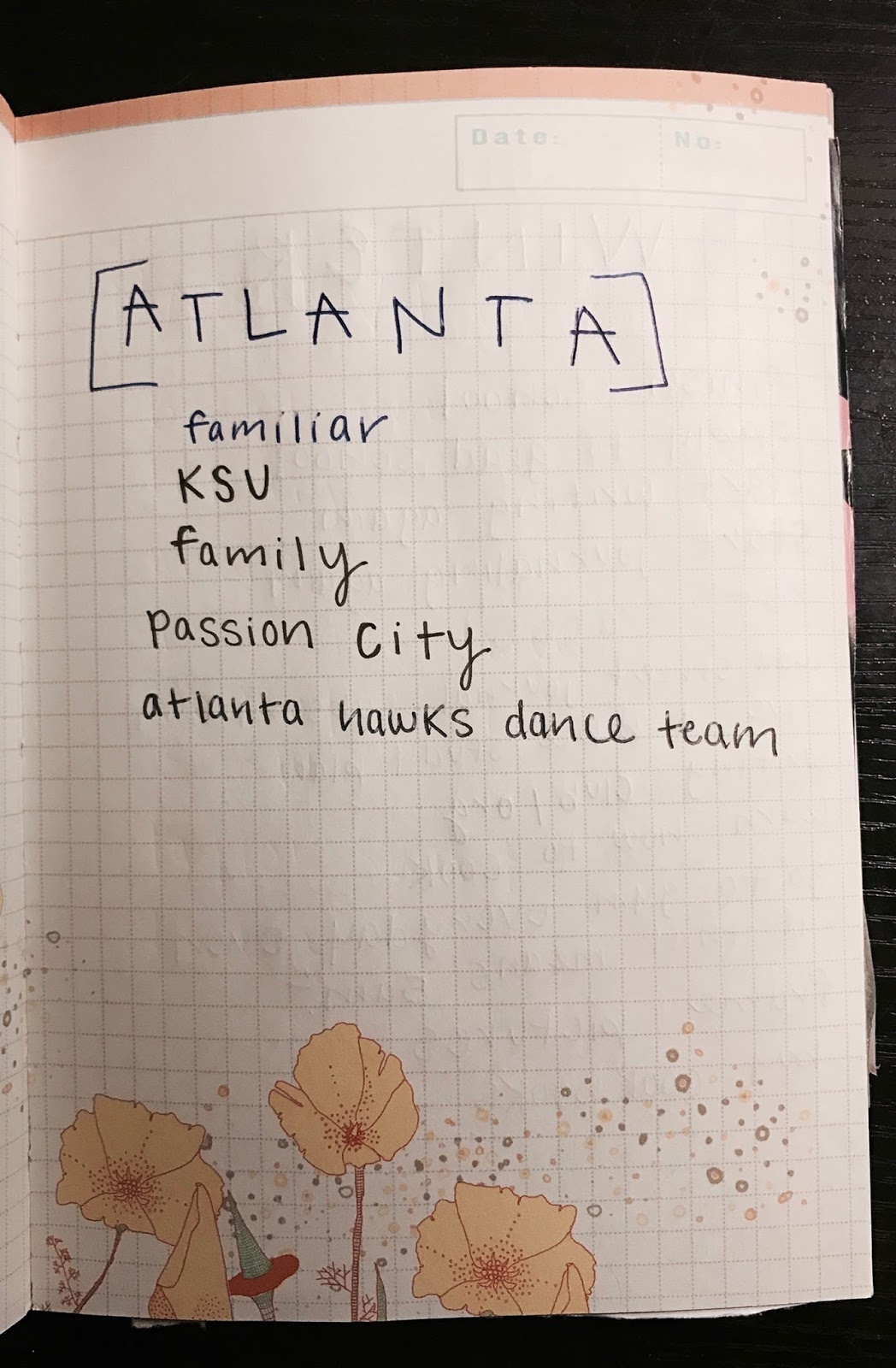
a quick update for all of the folks at home: the format is still my favorite band with the tarlatans/beach tiger a close second. i am in graduate school at ksu, working on becoming a marketing director for a university. im making an (impossible) attempt at getting into the more technical side of marketing (coding, analytics) and i hope to have so much extra time on the weekends that i can freelance for a dance company(atlanta ballet, pacificnorthwest). seeing the grand canyon is on the top of my ‘to do’ list, i hope to make a major move to either nashville, utah, or colorado. i have future plans to adopt a wiemaraner and name him hamilton (yes, after alexander hamilton and because of the play). i still drink hot tea before bed (but sometimes wine) and obsess over being french (right now i have all of the turtlenecks from jcrew). i saw elton john in concert last september and cried while he sang ‘tiny dancer.’ i have a pretty good idea of who i am going to marry, but i have an even better idea of the song for the first dance (fire by augustana). i am incredibly insecure about my braces but they will come off in twenty five days, and i am even more insecure about how i will look once the braces come off (is it possible to look even worse?).


i am also on my fourth journal (there is an insurmountable amount of pressure for this one to be really good, the pattern was discontinued and the book cost me way too much) so i figure i might as well start off with a state of the union. one day i will move to a real website but the nostalgia is real with this one (i have also finally seen star wars and didn’t completely hate it).


results of self reflection: 
i wear one pattern at a time 
i show up to work on time 
not everything needs to be broadcasted 
invest in the good makeup 
its okay to eat in front of boys 
stop drinking moscato 
being in the spotlight is usually a bad thing 
i don't always have to be the one talking 
be nice. be nice. be nice. 
if i'm not having fun at the party, leave the party 
when someone shows me who they are, believe them the first time 
you don't always have to respond 
weightlifting is good for you 
facebook is not a news source 
my citizenship is in heaven 
have a cup of tea before bed. 


stranger things affected me because i had such a connection to barb, especially the scene when she watches everyone go upstairs and she's all alone in the hallway. and then the duffer brothers forgot all about her which i thought was savage af. 


my favorite 'fast company' article, september 2016. 
'those were scare tactics, i have a business to run.' 

so i get it, beach tiger is a weird name, but give them a try. 
&& this is my favorite song. 

Friday, June 26, 2015

seventeen thirty eight.

i owe this blog a lot of posts, posts like how this blog is officially five years old, how im currently shopping for a new city, and the fun and slightly nightmarish times of being a college graduate. 

but since summer is sacred, all of that is on pause while i decorate my sweet, little apartment, work full time to save up for a new bike, attempt to read the wall street journal everyday, drink an entire kettle of green tea, and stare at the to-do list i like to call ‘ella get your sh*t together,’ an intimidating little number about all of the hoops i need to jump through to get that big girl job.

so in the meantime, i leave you with this playlist. not just any playlist however, one filled with songs that i have loved dearly since the days of riding the bus home from school. you could consider them comfort songs, like fried chicken and mashed potatoes for the soul.

download the playlist via spotify here: roots.
and find reasons why they were chosen after the jump. 


in the spirit of adventure
the ultimate theme song
because john hughes gave me an unrealistic perception of high school
something to listen to with the windows rolled down
if God had a song for me, this one would be it
my favorite dance routine of all time
the first song on the mixed cd that introduced me to all things indie
that one time i wanted to move to boston
the sweetest love song
memories of family car rides
my favorite psalm
the tarlatans will be singing a cover of this song at my wedding

Thursday, February 26, 2015

duck.


it's an odd feeling, to find that life goes on even after the death of my grandfather. 
i'll be in class, driving down abercorn, giving fritz a bath, and i'll think of a conversation i wish i could have. of one last thing i want to say. 

but all of that aside, this is a list of thoughts i wrote down the morning my grandfather died. 

God, please be nice to him. 
maybe i'll take up painting. 
a razorback shirt would be nice. 
my mom is an orphan. 
so it's true, only the good die. 

if there isn't really a heaven, i am going to be pissed. 
will my brothers be ok. 
at least i don't have to see june again. 
i'm going to go through this at least seven more times. 
do i still have his business card. 
can he really see me down here. 

&& i listened to this song on the flight to arkansas. 


Thursday, February 12, 2015

work of fiction.

i have been in college for five years now and have yet to write any fiction.  yet, in the closing act of my college career, i found myself desperate in the final hour of a deadline with nothing to show.
a sudden drive to atlanta last tuesday meant packing a surplus of underwear and pants while leaving the planner and syllabus behind. all this to say, i can't quite describe the panic when it finally dawned on me that i had an essay due in about nine hours. so alas, my first official piece of fiction came out of an assignment meant to interview a person of importance. i wrote the "interview" based on a next door neighbor of mine who has since then passed on, so im not certain on the political correctness of this essay. 


The Grandmother Next Door

After eleven years as a next-door neighbor, Ella Greer learns that there is more to grandmothers than cookies, porcelain figurine collections, and the classic five dollar check for birthdays.

            It was a rare occasion when I walked past Joann’s house without a fierce, gimp-legged, six-pound Chihuahua named Belle bravely yapping at me from the mailbox.  Guardian of the front yard, Belle was as synonymous with Joann as peanut butter is to jelly. I was visiting the eighty-one year-old grandmother so I could put up the dishes and run the washing machine, a few tasks that give Joann trouble in her old age. She has kept the front door unlocked, a habit that makes me nervous, but she assures me that Belle is all the security she needed. Her kitchen is messier than usual and I can hardly see the magnolia printed tablecloth from underneath the mail and folders strewn about. I am a bit of a snoop by nature and when I see a business card from First Baptist Church of Woodstock’s prison ministry, I immediately assume that Joann’s grandson has not been able to mow the lawn because he has been in jail. Being a member of the same church, I decide to ask Joann about the ministry in hopes to find out what Chris was in for.

She was a favorite in the prison, Joann Cole. The officers knew her as ‘Ms. Library,’ a moniker contrived from the wide-rimmed glasses she always wore. The prisoners knew her as one of their own, a fellow inmate who proved there was life outside of the barbed-wire fence. This camaraderie was a bit of a stretch however, for Cole never did hard time per say, only about six hours in a holding cell at the county jail until a school friend, Wendy, came to post bail and pick her up. The loneliness and fear she felt in the cellmates stayed with her long after she was released and when she heard about a Bible study that the First Baptist Church of Woodstock hosted at the county jail, she volunteered to help out. For ten years, Joann has dedicated an afternoon a week to visiting the jail with the other volunteers in the ministry and directed a Bible study lesson with the inmates. Joann often found herself connecting with the prisoners as they talked about abuse or wanting to start fresh somewhere new. While she was not a lawyer or able by any means to change their current situation, being there to treat the women as women of worth rather than a jumpsuit was almost as helpful, if not more.
When Joann divulged the meaning behind her nickname, I was shocked. Here was the sweet, tiny, grandmother sitting across from me, wearing a burgundy velour tracksuit and feeding her Chihuahua FrostyPaws -a special ice cream for dogs-there was no way I could imagine her sitting in the back of a police car or being finger printed for her criminal record. Sensing my confusion, Joann smiled and I swear I could see a mischievous glint in her eyes.
“My college sweetheart was a son of a bitch. I knew it, but I did not want to be alone after my mom died, so I stayed with him. Well, that and because he was by far the best-looking boy I have ever dated.” Joann winks at me as she takes a sip of her Diet Coke with lime. “One night I went over to his house, some friends were over to play cards, and he was drunk. He was drunk most of our relationship, but that night was different.”
Joann did not know at the time, but Robert (her college sweetheart) was fired from his job at the restaurant earlier that day and his anger was elevated after a night of drinking and losing round after round of cards to his friends. What seemed like a relationship heading for marriage, what their friends could not see was the abuse Joann received when the two were alone.
            “He would call me names and talk about how none of my friends liked me, silly stuff like that, but the longer we dated the worse it got.”
            Young and in love, Joann tried her best to focus on how cute Robert was and how much they enjoyed each other when he was in a good mood rather than the times he made her cry or flirted with other girls in front of her. Everything changed that night however, and as Robert pushed her into the wall and told her to “get the hell out,” something inside Joann snapped; she had finally had enough.
            “He did not have to tell me twice, all I could think about was getting out of there, and then I saw his golf clubs.”
            It feels like a scene out of a movie, listening to this story and watching Joann remember it as if it happened last week. As Joann left the ill-fated card game through the garage, she was too upset from what happened to have room for second thoughts. She grabbed a golf club, walked to his car parked out in the driveway, and calmly shattered the windshield.
            The story accelerates from there; Robert came out to check out the commotion, the police was called, a report was filed, Joann was handcuffed, and the friends watched as the police car sped out of the neighborhood. A few hours later Wendy, Joann’s fellow teammate from when she played high school basketball, came to take Joann home. The drama only lasted a few hours from the time she went over to Robert’s that night to when she finally made it home, but its story left an impression on the small town.
            “I was embarrassed about everyone seeing my picture [the mugshot] but all anyone could ask me was how the hell I managed to get the damn thing [golf club] over my head.” 
            The surprise was well understood for Joann had spent the greater portion of her childhood attached to an iron lung as she battled a severe case of the whooping cough. She barely escaped the illness with the use of her legs, a stroke of luck she is unable to forget these days as she is learning how to operate with a bad knee, a new knee in recovery, and a new hip, Joann is not making dunks or destroying property these days.
            “They still joke about it now when we go back to visit. They ask me if I have to hide my [golf] clubs,” laughs her husband John. “She’s always been a good sport about it, I poke fun at her every now and then, I’d warn her when I was about to watch Cops [the television show] just in case she got flashbacks.”
            Joann shocked the community once again after defying the odds and not only graduating from business school, the first Holloway to do so, but she also landed an interview as a shorthand writer for Marietta Martin, now known as Lockheed Martin, an advanced technology and aerospace corporation in Kennesaw, Georgia. She rolled the dice and left her childhood home in Augusta, Georgia to chase down the dream of proving to her father that her degree did serve a larger purpose than being able to shirk the housewife chores. Thirty years later she proudly boasted of being able to retire from her first and only job.
            “We were all in this one room with our own desk and we connected calls and typed office memos all day. I got really good at short hand and typed the fastest so they put me in charge of the rest.”
            Three decades saw many changes for the company and unfortunately the changes very rarely proved to be positive or even neutral towards Joann and her career. Being a woman who skipped marital bliss to go to college and then have the audacity to work at a job was hard enough; Joann had to constantly prove her relevancy as technology evolved. Even though society somewhat came to terms with women in the workforce, typewriters and switchboards became obsolete, making the job that many of the women were hired to do unnecessary; a cruel cosmic joke for someone who just gained acceptance for choosing to get a degree first over a new last name.
            She was successful in eventually finding and locking down that new last name however, for one day John Cole came to her desk needing a signature for a delivery and the rest as they say was history. John, working for Lockheed Martin part time these days and managing their property of farmland in Fannin County, Georgia (the Blue Ridge area), finds himself away from 548 Cross Creek more than he would like. During one of these many outings, Brock Greer, Joann’s occasional lawn mower and window shutter painter, taught her how to use the FaceTime feature of her iPhone so she and John could keep in touch. For someone who conquered thirty years of technology advances, however it appears that Apple has officially stumped her.
            “Biggest mistake I’ve ever made. She would FaceTime me randomly sometimes and all the sudden the entire class hears her yelling about needing help finding Belle or something. I haven’t gotten her to understand that she doesn’t have to yell at the phone so I can hear her,” laments Brock. “She’s kind of funny though, like I’ll never forget the time she met Siri. Good times.”
            “I couldn’t believe that inside my phone was such a sensitive robot woman that didn’t like being spoken to in such a harsh manner and wanted to know what she had done to deserve my anger!”

            Joann has stunned neighbors for eighty-one years now. She defeated whooping cough and refused to accept the partial paralysis the disease left her with. She found the strength to escape an abusive relationship, was arrested, and volunteered for a prison ministry. She was the first in her family to achieve a higher education, left home with only the excitement of building a life of her own, fought for her job at Lockheed Martin, and now lives a quiet life with her husband and cannot seem to think of a single thing to complain about.


Related Posts Plugin for WordPress, Blogger...